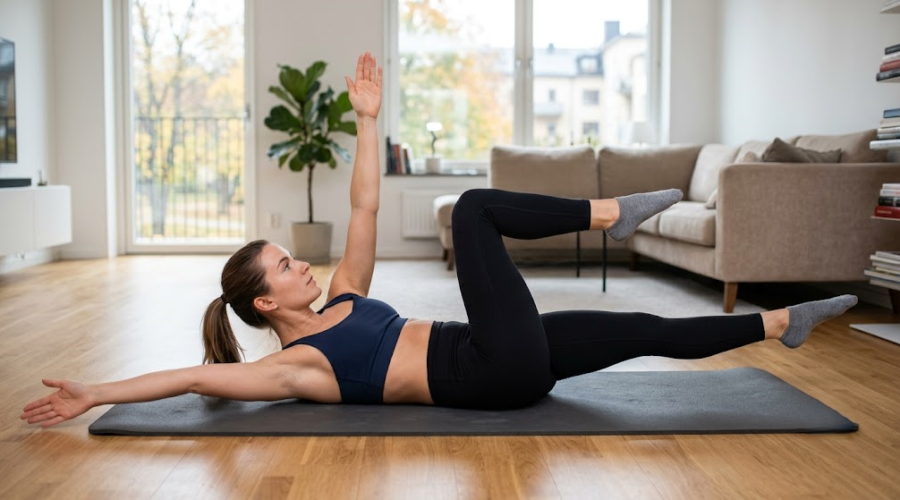
How to Lose Belly Fat at Home Without Going to the Gym
Belly fat is one of the most frustrating things to deal with — and if you’re looking for how to lose belly fat at home, you’ve probably already tried a few things that didn’t produce the results you expected. The good news: a gym membership isn’t what’s standing between you and a flatter stomach. The right combination of targeted home exercise, dietary adjustments, and lifestyle changes can meaningfully reduce belly fat — including the more dangerous visceral kind — without setting foot in a gym.
Understanding what’s actually driving belly fat storage, and what genuinely works to reduce it, is the difference between spinning your wheels and seeing real progress. This guide covers all of it — the science, the exercises, the dietary changes, and a realistic weekly plan you can start this week.
Why Belly Fat Is Different (And More Dangerous)
Not all body fat is created equal. The two distinct types stored in and around the abdomen behave very differently and carry very different health implications.
Subcutaneous fat is the soft, pinchable layer directly under the skin. It’s visible, feels more prominent, and is the type most people are primarily concerned about aesthetically. It’s relatively benign from a health standpoint.
Visceral fat is different. It sits deeper in the abdominal cavity, wrapping around internal organs including the liver, pancreas, and intestines. You often can’t see or feel it directly — but it’s the fat that matters most for health. Research consistently links high visceral fat to elevated risk of cardiovascular disease, type 2 diabetes, insulin resistance, and chronic systemic inflammation.
Visceral fat is also metabolically active, meaning it releases inflammatory compounds and fatty acids into the bloodstream in ways that subcutaneous fat doesn’t. The encouraging part: visceral fat tends to respond to lifestyle intervention faster than subcutaneous fat. When you make the right dietary and exercise changes, visceral fat is typically the first to go.
The Truth About Spot Reduction
This is the piece of information that prevents most people from making real progress: you cannot spot-reduce belly fat by doing ab exercises alone.
Hundreds of crunches will strengthen and tone the muscles underneath your belly fat, but they won’t selectively burn the fat sitting on top of or around them. Fat loss is systemic — your body draws from fat stores across the entire body in response to a caloric deficit, not from the area being exercised.
Research has confirmed this consistently. A study frequently cited in exercise science literature found that participants who performed targeted abdominal exercises for six weeks showed no more reduction in abdominal fat than a control group. What does reduce belly fat — including visceral fat — is the combination of overall fat loss driven by a caloric deficit, cardiovascular exercise that elevates heart rate and burns significant calories, and strength training that preserves and builds lean muscle mass to raise resting metabolism.
The exercises in this guide work not because they magically melt fat from your midsection, but because they create the caloric expenditure, EPOC afterburn, and metabolic conditions that drive overall fat loss — which includes the belly.
Best Home Exercises to Lose Belly Fat
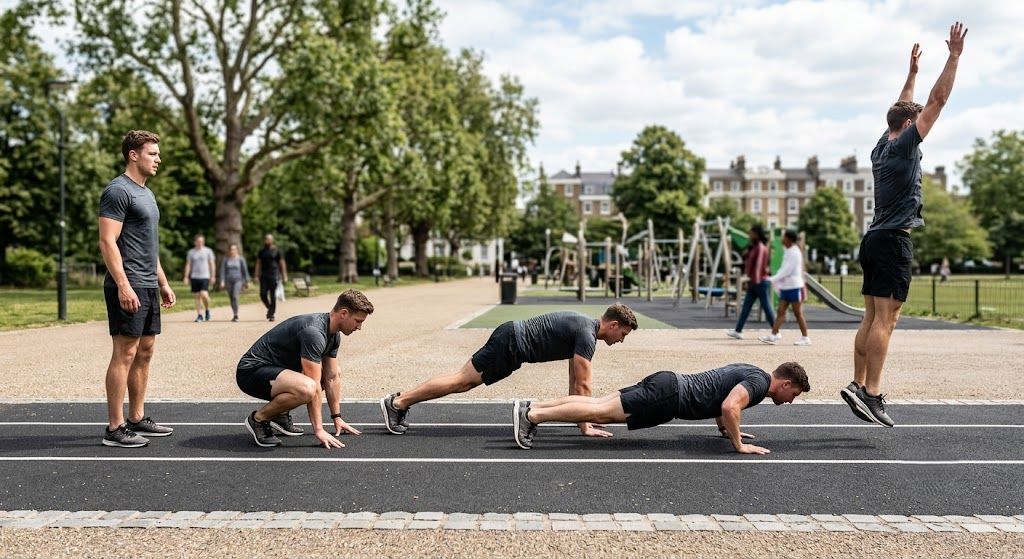
Burpees
Sets/Reps: 3 sets of 8–10 reps | Rest 60 seconds between sets
Burpees are one of the most effective fat-burning exercises available without any equipment, primarily because they engage virtually every major muscle group simultaneously. Starting from standing, drop your hands to the floor, jump or step feet back to a plank position, lower your chest to the floor (optional push-up), jump feet back toward hands, then explosively jump upward with arms overhead. The full-body demand creates significant EPOC — the “afterburn” effect where your metabolism remains elevated for hours after the workout ends. Beginners can step feet back rather than jumping to reduce impact while maintaining the caloric burn.
Mountain Climbers
Sets/Reps: 3 sets of 30 seconds | Rest 45 seconds between sets
Mountain climbers are a core-plus-cardio combination that few exercises match. Start in a high plank position (hands under shoulders, body in a straight line). Drive one knee toward your chest, quickly return it, and immediately drive the other — alternating as fast as you can maintain good form. The continuous leg drive keeps heart rate elevated for cardiovascular benefit while the plank position engages the deep core stabilizers — transverse abdominis and obliques — that actually reduce the visible size of the waistline when strengthened. Keep hips level; don’t let them pike upward.

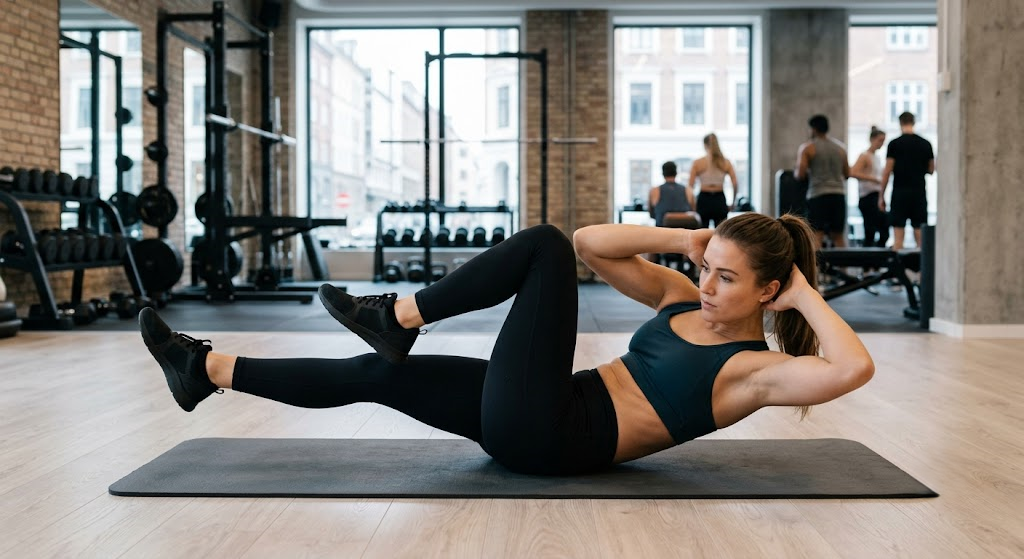
Bicycle Crunches
Sets/Reps: 3 sets of 20 reps (10 each side) | Rest 45 seconds between sets
The American Council on Exercise (ACE) commissioned a study comparing the effectiveness of thirteen common ab exercises — and bicycle crunches ranked as the most effective for rectus abdominis activation and the most effective for oblique engagement. Start lying on your back with hands behind your head (fingers lightly touching, not pulling on the neck). Lift both shoulders off the floor, bring one knee toward your chest while rotating the opposite elbow toward it, then switch in a cycling motion. The rotation is what activates the obliques — the muscles that create the narrowing of the waist — making bicycle crunches more complete than any fixed-plane crunch variation.
Plank Variations
Sets/Duration: 3 sets of 20–40 seconds each | Progress weekly
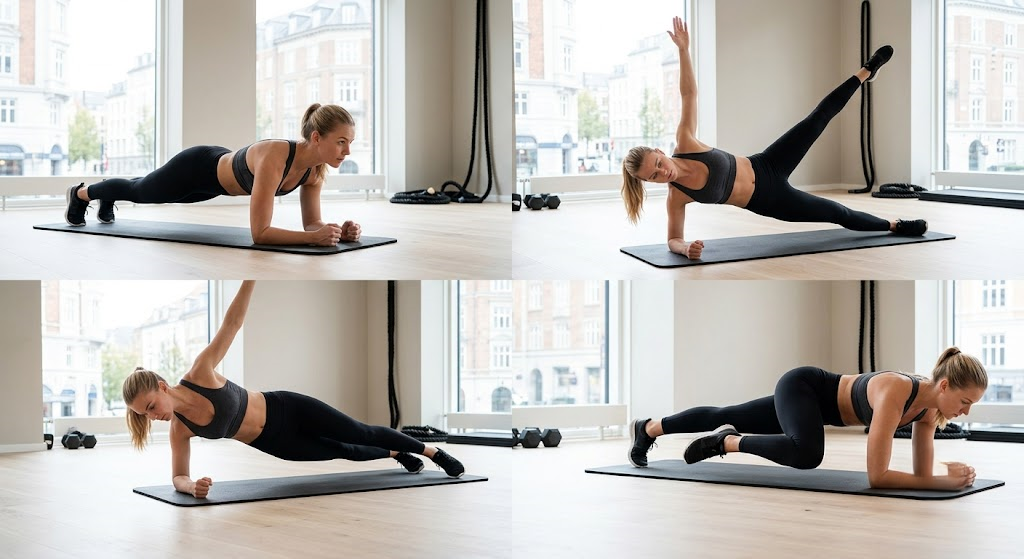
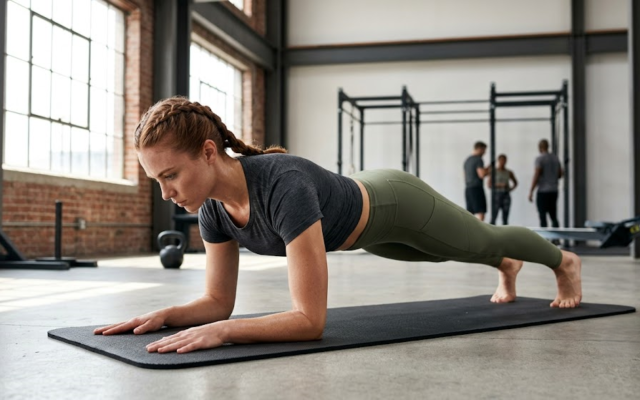
The standard forearm plank is the foundation: elbows under shoulders, body forming a straight line from head to heels, core braced, glutes squeezed. As that becomes comfortable, add variations: side planks (oblique focus, hold 20 seconds each side), plank with alternating arm reach (challenges stability), and plank to downward dog (adds shoulder mobility). Planks work through isometric contraction — muscles fire without movement — which builds the deep stabilizing muscles of the core that support posture, protect the lower back, and create the functional strength that reduces waist circumference over time.
High Knees
Sets/Duration: 3 sets of 40 seconds | Rest 20 seconds between sets
High knees are one of the fastest ways to elevate heart rate in a small space without equipment. Run in place while driving your knees as high as possible — ideally to hip height — with arms pumping in opposition. The goal is speed: these are meant to be performed at a pace that makes conversation difficult. In a 20-minute home workout, three 40-second rounds of high knees can burn a meaningful number of calories while also engaging the hip flexors and lower core in the driving motion. For low-impact modification, march with exaggerated high knee raises instead of running.

Jump Rope (Or Invisible Jump Rope)
Sets/Duration: 3 sets of 60 seconds | Rest 30 seconds between sets
Jump rope is one of the highest-calorie-burn exercises per minute available — studies estimate 10–15 calories per minute depending on intensity, which is comparable to running. If you don’t own a rope, invisible jump rope (performing the exact same jumping and arm-rotation motion without the rope) delivers nearly identical cardiovascular and caloric benefit. It looks slightly absurd and works just as well. The combination of calf activation, cardiovascular demand, and coordination requirement makes it a surprisingly complete exercise that beginners can build stamina on quickly.

Dead Bug Exercise
Sets/Reps: 3 sets of 8–10 reps each side | Slow and controlled
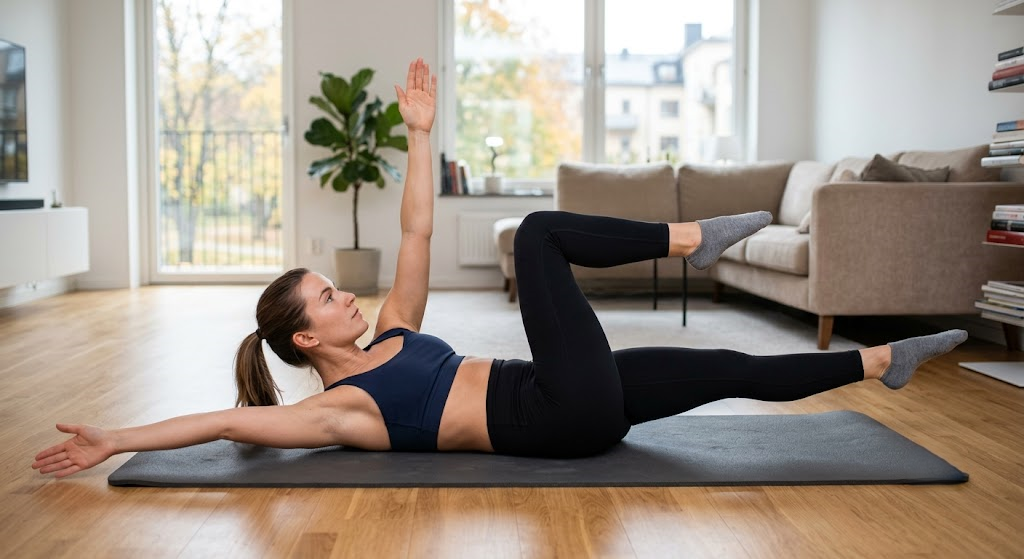
The dead bug is less familiar than the others but arguably the most functional core exercise on this list. Lie on your back with arms pointing toward the ceiling and knees bent at 90 degrees directly above your hips (tabletop position). Slowly lower your right arm behind your head while simultaneously extending your left leg toward the floor — without letting your lower back arch off the ground. Return to start and repeat on the opposite side. This exercise specifically targets the transverse abdominis (the deepest abdominal muscle) and builds the anti-extension core stability that protects the lumbar spine and creates the foundation for all other core work to be more effective.
Diet Changes That Target Belly Fat
Exercise creates the conditions for fat loss. Diet determines whether fat loss actually happens. These dietary changes have the strongest research support for reducing belly fat specifically:
Cut refined sugar and alcohol. Both are directly and disproportionately linked to visceral fat accumulation. Fructose from added sugar is preferentially metabolized by the liver, with excess converted to fat that tends to deposit viscerally. Alcohol similarly drives liver-mediated fat storage around the midsection and contributes significant empty calories. Reducing both is often the single highest-impact dietary change for belly fat.
Increase protein. Protein reduces levels of the hunger hormone ghrelin, increases satiety hormones, and has a higher thermic effect than carbohydrates or fat — meaning your body burns more calories digesting it. Adequate protein during a caloric deficit also preserves lean muscle mass, which keeps resting metabolism higher. Aim for 25–35g at every meal.
Add soluble fiber. Research published in Obesity journal found that each 10-gram increase in daily soluble fiber intake was associated with a 3.7% reduction in visceral fat accumulation over five years. Oats, flaxseed, beans, and avocado are the highest-return sources. Soluble fiber feeds beneficial gut bacteria and slows digestion, reducing the blood sugar spikes that drive fat storage.
Reduce sodium. High sodium intake doesn’t directly cause fat gain, but it drives significant water retention that shows up as abdominal bloating — often misread as fat. Reducing processed food sodium can produce noticeable visual changes in belly appearance within a week.
Eliminate liquid calories. Sugary drinks, juice, alcohol, and sweetened coffee are among the most calorie-dense, least satiating inputs you can consume. Replacing them with water, sparkling water, or unsweetened beverages creates a meaningful daily caloric reduction without changing any solid food intake.
Lifestyle Habits That Reduce Belly Fat
Sleep 7–9 hours. The cortisol-belly fat connection is one of the most well-documented relationships in metabolic health research. Chronic sleep deprivation elevates cortisol — the stress hormone — which directly drives fat storage in the visceral region. People who consistently sleep under six hours show measurably higher visceral fat accumulation than those who sleep seven to nine, even controlling for diet and exercise. Sleep is not optional for belly fat reduction.
Manage stress actively. Cortisol doesn’t just spike from sleep deprivation — it spikes from chronic psychological stress, and the metabolic consequence is the same: preferential fat storage in the abdominal area. Regular exercise is itself one of the most effective cortisol regulators, which creates a compounding benefit. Add deliberate stress management — whatever form works for you — and you address one of the most stubborn belly fat drivers most programs ignore entirely.
Walk 7,000–10,000 steps daily. Walking is underrated as a fat loss tool. It’s low-intensity enough to recover from quickly, accessible regardless of fitness level, and cumulatively burns significant calories across a day. Research on NEAT (non-exercise activity thermogenesis) consistently shows that daily movement outside of formal exercise sessions accounts for a meaningful portion of total energy expenditure. Combining a dedicated home workout with consistent daily walking is more effective for belly fat than either alone.
Sample 5-Day Weekly Plan
| Day | Exercise (20–25 min) | Diet Focus |
|---|---|---|
| Monday | Burpees (3×10) + Mountain climbers (3×30s) + High knees (3×40s) | High protein breakfast, cut sugary drinks |
| Tuesday | Bicycle crunches (3×20) + Dead bug (3×10) + Plank (3×30s) | Add soluble fiber (oatmeal, beans) |
| Wednesday | Walk 8,000+ steps + light stretching | Reduce sodium, eat whole foods |
| Thursday | Jump rope (3×60s) + Burpees (3×10) + Mountain climbers (3×30s) | Protein at every meal, no alcohol |
| Friday | Full circuit: all 7 exercises, 2 rounds | Prep healthy snacks for the weekend |
| Saturday | Active rest: walk, yoga, light activity | Cook at home, avoid takeout |
| Sunday | Rest + meal prep for the week ahead | Plan meals, batch cook protein + grains |
Frequently Asked Questions
How long does it take to lose belly fat at home? Realistically, noticeable reduction in belly fat takes four to twelve weeks of consistent effort — diet and exercise combined. Visceral fat (the deeper, more metabolically active fat) tends to respond first and faster than subcutaneous fat. Most people see initial changes in how clothes fit and how their abdomen feels within three to four weeks before the scale shows dramatic shifts. Sustainable fat loss of 0.5–1 pound per week is the realistic, body-preserving rate — faster loss often means muscle loss alongside fat, which is counterproductive long-term.
Can I lose belly fat without exercise? Yes — fat loss is primarily driven by diet (specifically a caloric deficit), and it’s possible to lose belly fat through dietary changes alone. That said, exercise significantly accelerates the process, helps preserve lean muscle mass during fat loss, addresses visceral fat more specifically through its effects on insulin sensitivity and cortisol regulation, and dramatically improves the overall health outcomes associated with fat loss. Diet without exercise produces thinner but not necessarily healthier or more metabolically efficient bodies. The combination is meaningfully better than either alone.
What foods burn belly fat? No single food “burns” belly fat — but research identifies foods that reduce visceral fat accumulation when eaten consistently. Soluble fiber foods (oats, flaxseed, beans, avocado) are the most research-supported. High-protein foods (eggs, chicken, fish, Greek yogurt, legumes) support fat loss by improving satiety and preserving muscle. Green tea has modest evidence for slightly elevated fat oxidation. The bigger picture: any eating pattern that creates a moderate caloric deficit while being high in protein and fiber will reduce belly fat over time.
How many crunches to lose belly fat? No amount of crunches will directly lose belly fat, because spot reduction doesn’t work. Crunches (and especially bicycle crunches, per ACE research) strengthen and tone abdominal muscles — but the fat overlying them is reduced through overall caloric deficit, not targeted exercise. This is why someone with very low body fat has visible abs without ever doing a single crunch: the muscles were always there; the fat covering them decreased. Do core exercises for strength, posture, and functional fitness — expect fat loss from your overall program, not from any individual exercise.
Does drinking water help lose belly fat? Water contributes to belly fat loss through several indirect mechanisms. It replaces high-calorie beverages (the most direct contribution). It promotes satiety — drinking a glass of water before meals consistently reduces calorie intake at those meals in research settings. Adequate hydration supports efficient metabolism and the cellular processes involved in fat breakdown. Dehydration is also often misread as hunger, leading to extra caloric intake. Water doesn’t directly “burn” fat, but staying consistently hydrated supports every process in the body that does.
Progress Happens at Home — If You Give It Time
Learning how to lose belly fat at home comes down to three things working together: the right exercises to create caloric expenditure and build metabolic muscle, dietary changes that reduce the inputs driving visceral fat accumulation, and lifestyle habits — particularly sleep and stress management — that address the hormonal drivers of belly fat that exercise and diet can’t fully compensate for alone.
None of it requires a gym. All of it requires consistency. Four to twelve weeks of genuine, sustained effort produces real, measurable results — and the changes compound on each other as your fitness improves, your diet stabilizes, and your sleep deepens.
Start with the five-day plan above. Commit to four weeks. Measure your progress in how your clothes fit and how you feel, not just the scale.
Consult your doctor before starting any new exercise program, particularly if you have a cardiovascular condition, joint problems, or have been sedentary for an extended period. If you experience pain, dizziness, or shortness of breath during exercise, stop and seek medical advice.
Leave a Comment