
The global probiotic market is now worth over $70 billion — and most people buying supplements have no real idea which strains do what, or whether the product they’re holding is worth the price on the label. Walk into any pharmacy and you’ll find dozens of options with wildly different CFU counts, unfamiliar strain names, and marketing claims that range from plausible to absurd. This guide cuts through the confusion. Whether you’re looking for the best probiotics for gut health, trying to recover from a course of antibiotics, or managing a specific condition like IBS or chronic bloating, what follows is an evidence-based breakdown of what actually matters — and what doesn’t.
What Are Probiotics and How Do They Work?
The World Health Organization defines probiotics as “live microorganisms that, when administered in adequate amounts, confer a health benefit on the host.” That definition is more nuanced than most supplement labels suggest.
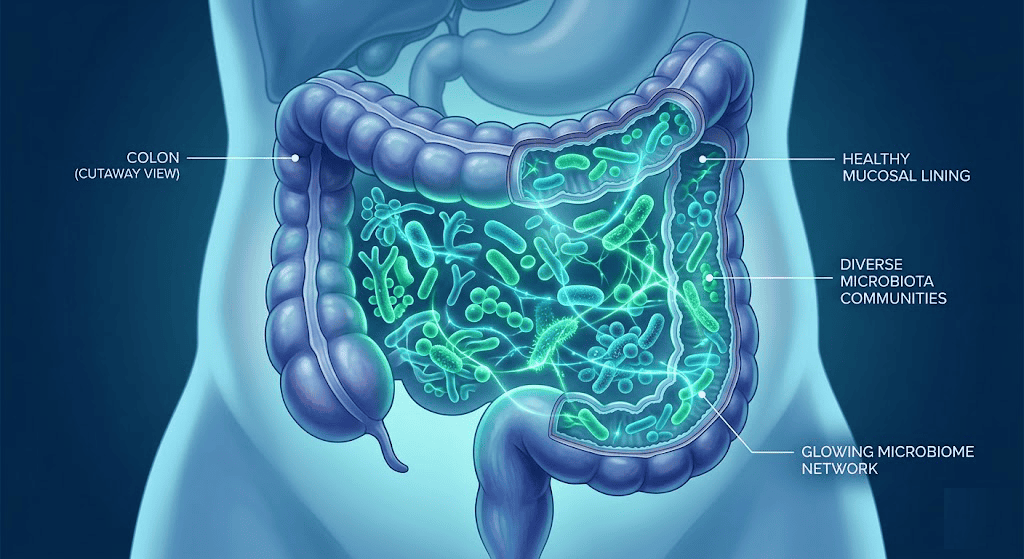
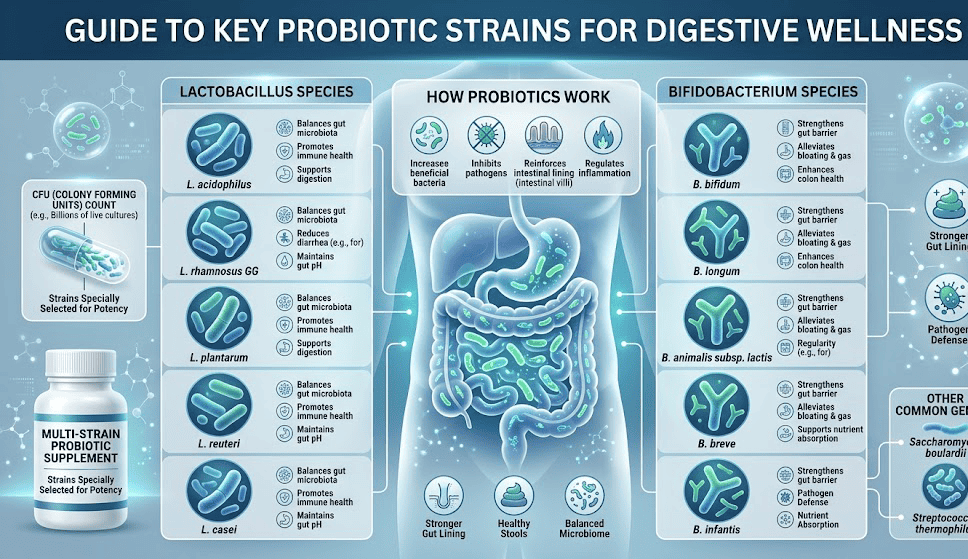
Most probiotics don’t permanently colonize your gut. They pass through, but while they’re there, they do meaningful work: competing with pathogenic (harmful) bacteria for space and resources, modulating your immune response, and producing short-chain fatty acids (SCFAs) like butyrate that nourish the cells lining your colon and reduce inflammation.
One number you’ll see on every label is CFU — colony forming units — which measures how many live bacteria are in a dose. More isn’t always better. A lower-CFU product with well-researched strains will outperform a mega-dose product with generic, poorly characterized bacteria. Strain specificity matters far more than raw CFU count.
The Most Important Probiotic Strains
Not all probiotics are interchangeable. Different strains have different mechanisms, different research bases, and different target conditions. Here’s what the evidence shows for the most clinically relevant strains.
Lactobacillus acidophilus
One of the most researched probiotic strains in existence, L. acidophilus lives naturally in the small intestine and is the backbone of many multi-strain formulas. Research consistently shows it may help reduce IBS symptoms including bloating, cramping, and irregular bowel movements. It also supports lactose digestion by producing lactase, making it particularly useful for people with dairy sensitivity. Look for it in products that specify the strain designation (e.g., NCFM or La-5).
Lactobacillus rhamnosus GG
Often abbreviated as LGG, Lactobacillus rhamnosus GG is the most extensively studied single probiotic strain in clinical literature, with hundreds of published trials. Its strongest evidence is in reducing antibiotic-associated diarrhea — both preventing and shortening episodes — and in supporting children’s digestive health. If you’re prescribed a course of antibiotics, LGG is one of the few strains with enough evidence to confidently recommend alongside it.

Bifidobacterium longum
This strain is increasingly studied for its role in the gut-brain axis — the communication network between your digestive system and your central nervous system. Research published in peer-reviewed journals suggests B. longum may help reduce anxiety and depressive symptoms in people with IBS, alongside improving constipation and bowel regularity. It’s a strong choice for anyone whose gut symptoms are accompanied by stress-related flare-ups.
Bifidobacterium lactis
B. lactis (also listed as B. animalis subsp. lactis on some labels) is one of the most effective strains for improving gut transit time — meaning it helps food move through your digestive system at a healthy pace. Multiple RCTs support its use for reducing bloating and constipation, and there’s also reasonable evidence for immune support, with studies showing increased natural killer cell activity in older adults taking this strain regularly.
Lactobacillus plantarum
One of the more resilient probiotic strains available, L. plantarum is notable for its ability to survive the acidic environment of the stomach and reach the intestines intact — a challenge that defeats many other strains. Clinical evidence supports its use for IBS symptom management, including pain and bloating, and it has demonstrable anti-inflammatory properties. It’s commonly found in fermented foods like kimchi and sauerkraut.

Saccharomyces boulardii
Unlike every other entry on this list, S. boulardii is a yeast, not a bacterium. This makes it uniquely useful: it’s unaffected by antibiotics (which target bacteria, not yeast), making it ideal to take simultaneously with an antibiotic course. It has the strongest evidence base of any probiotic for traveler’s diarrhea prevention and antibiotic-associated diarrhea. People with yeast sensitivities or compromised immune systems should discuss it with a doctor first.

Lactobacillus reuteri
L. reuteri produces antimicrobial substances called reuterin that help suppress pathogens including H. pylori — the bacteria responsible for most peptic ulcers. Research also supports its use for infant colic (via drops) and there’s emerging evidence for cardiovascular benefits including modest cholesterol reduction. It’s less commonly found in standard formulas but worth seeking out for specific applications.

What to Look for When Buying Probiotics
This is where most people go wrong. Here’s what actually matters when evaluating a probiotic supplement:
CFU Count — Match It to Your Goal For general gut health maintenance, 1–10 billion CFU per day is typically sufficient. For therapeutic use — recovering from antibiotics, managing IBS, or addressing a specific condition — look for 10–50 billion CFU. Products boasting 100 billion+ CFU are generally not better and may cause temporary digestive discomfort. Higher isn’t the goal; appropriate is.
Strain Specificity A label that reads “Lactobacillus acidophilus” is better than one that says only “proprietary probiotic blend” — but ideally you want the full three-part designation: genus (Lactobacillus), species (acidophilus), and strain designation (NCFM). That last part is what the clinical research is tied to. Generic strain names give you no way to verify what the research actually shows.
Expiration Date Guarantees This is critical and widely misunderstood. CFU count should be guaranteed at the time of expiration, not at the time of manufacturing. A label that guarantees 10 billion CFU at manufacture may contain far fewer by the time you open it. Look explicitly for “guaranteed through expiry” language.
Refrigerated vs. Shelf-Stable Refrigeration isn’t automatically superior. Many modern shelf-stable probiotics use microencapsulation technology that protects strains effectively at room temperature. What matters is the manufacturer’s storage testing data, not the refrigerator door.
Third-Party Testing Look for NSF International, USP, or Informed Sport certification. These verify that what’s on the label is actually in the capsule — a non-trivial concern in a largely unregulated supplement category.
Delayed-Release Capsules A good enteric-coated or acid-resistant capsule protects live bacteria from stomach acid and dramatically improves the percentage of bacteria that reach the intestines alive. This is particularly important for strains that are less acid-resistant (like Bifidobacterium species).
What to Avoid: Proprietary blends without strain-level naming, wildly inflated CFU counts with no expiry guarantee, and products with no third-party verification.
Best Probiotics for Specific Conditions
| Condition | Best Strains |
|---|---|
| IBS | L. plantarum + B. infantis |
| Antibiotic recovery | L. rhamnosus GG + S. boulardii |
| Constipation | B. lactis |
| Bloating | L. acidophilus + B. longum |
| Anxiety / mood support | L. rhamnosus + B. longum |
| Immune support | L. rhamnosus GG + B. lactis |
| Traveler’s diarrhea | S. boulardii |
Use this table as a starting point — not a prescription. Many people benefit from a multi-strain formula that covers several of these bases simultaneously, rather than chasing single-strain products for every symptom.
Probiotic Foods vs. Supplements
Fermented foods — yogurt, kefir, kimchi, sauerkraut, miso, tempeh — deliver real, live probiotics alongside prebiotics (the fiber that feeds beneficial bacteria) and a full matrix of nutrients that isolated supplements can’t replicate. For everyday gut health, food should be your foundation.
Supplements offer something different: controlled, documented strains at specific doses, which is particularly valuable when you’re targeting a specific condition. A pot of yogurt, however good, can’t tell you exactly how many L. rhamnosus GG organisms you’re getting per serving.
The most evidence-backed approach is both: probiotic-rich fermented foods as a daily habit, plus a targeted supplement when you have a specific digestive issue to address. They work better together than either does alone.
Common Probiotic Mistakes
1. Stopping too soon. Most probiotic research uses intervention periods of 4–8 weeks minimum. Stopping after a week because you “don’t feel different” doesn’t give the bacteria enough time to establish a meaningful presence. Commit to at least a month before evaluating results.
2. Using the wrong strain for your condition. Taking a Bifidobacterium lactis supplement for traveler’s diarrhea — when S. boulardii is what the research supports — is like using the wrong key for the lock. Strain specificity is everything.
3. Not pairing with prebiotics. Probiotics need prebiotic fiber to thrive. Without adequate dietary fiber (from vegetables, legumes, whole grains, fruit), the beneficial bacteria you’re supplementing have nothing to feed on. Consider a prebiotic supplement or increase your fiber intake alongside your probiotic.
4. Taking probiotics with hot drinks. Washing down a probiotic capsule with hot coffee or tea can kill a significant portion of the live bacteria before they even reach your stomach. Take probiotics with room-temperature or cool water.
5. Buying without strain-specific research. A beautifully packaged probiotic with 50 billion CFU and a dramatic health claim is worthless if none of those strains have been clinically studied. Research the strains, not the label.
Frequently Asked Questions
How long before probiotics start working? For acute issues like antibiotic-associated diarrhea, some people notice improvement within a few days. For chronic conditions like IBS, bloating, or constipation, the research-supported timeframe is typically 4–8 weeks of consistent daily use. Gut microbiome changes are gradual — patience and consistency matter more than high doses.
Can I take probiotics every day? For most healthy adults, yes — daily probiotic use is safe and generally well-tolerated long-term. The NIH National Center for Complementary and Integrative Health notes that probiotics have a strong safety record in healthy individuals. If you experience persistent bloating or discomfort after starting, reduce the dose or switch strains.
Are probiotics safe for everyone? For most people, yes. However, people who are immunocompromised (including those on immunosuppressive medication, post-organ transplant patients, or those undergoing chemotherapy), people who have recently had surgery, or those with serious underlying conditions should consult a doctor before starting probiotics. There are rare but documented cases of probiotic-related infections in severely immunocompromised individuals.
Should I take probiotics with food or without? Most research suggests taking probiotics with a small meal or just before eating produces better survival rates through stomach acid. The food buffers stomach pH and creates a more hospitable environment for bacteria to transit to the intestines. Avoid taking them with very hot food or beverages.
Do probiotics help with weight loss? The research here is preliminary and inconsistent. Some studies suggest certain strains — particularly Lactobacillus gasseri — may modestly reduce visceral fat, but the effect sizes are small and findings haven’t been reliably replicated. Probiotics should not be viewed as a weight loss intervention. Their value lies in digestive health, immune support, and potentially mood regulation — not caloric management.
Choosing the Right Probiotic Starts With the Right Information
The best probiotics for gut health aren’t necessarily the ones with the highest CFU counts or the most expensive packaging — they’re the ones with well-researched, strain-specific formulas matched to your actual needs. Start with strain specificity, verify CFU guarantees at expiry, look for third-party testing, and pair your supplement with a diet rich in fermented foods and prebiotic fiber.
For most people, a multi-strain product containing L. acidophilus, L. rhamnosus GG, B. lactis, and B. longum covers the broadest range of digestive health benefits. For specific conditions, use the strain table above as your guide.
If you found this guide useful, explore our related articles on home remedies for bloating that work fast and whether apple cider vinegar helps with weight loss for a more complete picture of digestive health.
This article is for informational purposes only and does not constitute medical advice. Consult your doctor before starting probiotics if you are immunocompromised, post-surgery, pregnant, or managing a serious health condition.

Leave a Comment