Home Remedies for Sore Throat That Actually Work
Waking up with a scratchy, painful throat is never a good start to the day — and your first instinct is usually to find relief fast. Home remedies for sore throat have been used for generations, and several of them have real science to back up why they work. Whether your throat is a victim of a seasonal cold, dry winter air, or the early stages of the flu, most viral sore throats don’t need a doctor’s visit. What they need is the right combination of soothing, antimicrobial, and anti-inflammatory support — all of which you can put together from your kitchen and medicine cabinet.
What Causes a Sore Throat?
Understanding the cause helps you choose the right remedy and know when to escalate.
Viral infections are responsible for the vast majority of sore throats — colds, flu, COVID-19, and mononucleosis all commonly present with throat pain. Bacterial infections, particularly strep throat caused by Streptococcus pyogenes, account for roughly 5–15% of adult cases and do require antibiotic treatment. Dry air — especially in winter with indoor heating running — dehydrates the throat’s mucous membranes, leaving them raw and irritated. Allergies trigger postnasal drip that inflames the throat, and acid reflux causes stomach acid to creep up overnight, leaving a burning soreness in the morning.
For viral and environmental causes, home remedies may help soothe symptoms significantly while your body heals.
10 Home Remedies for Sore Throat That Actually Work
1. Honey and Warm Water
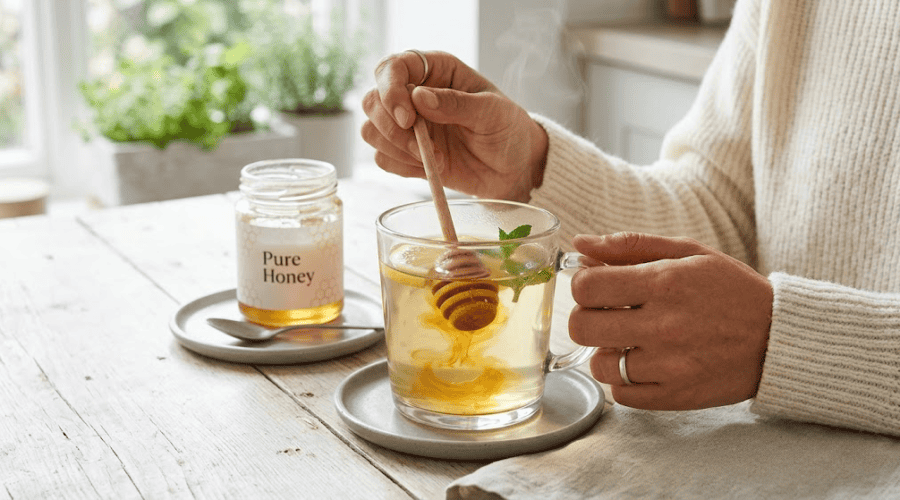
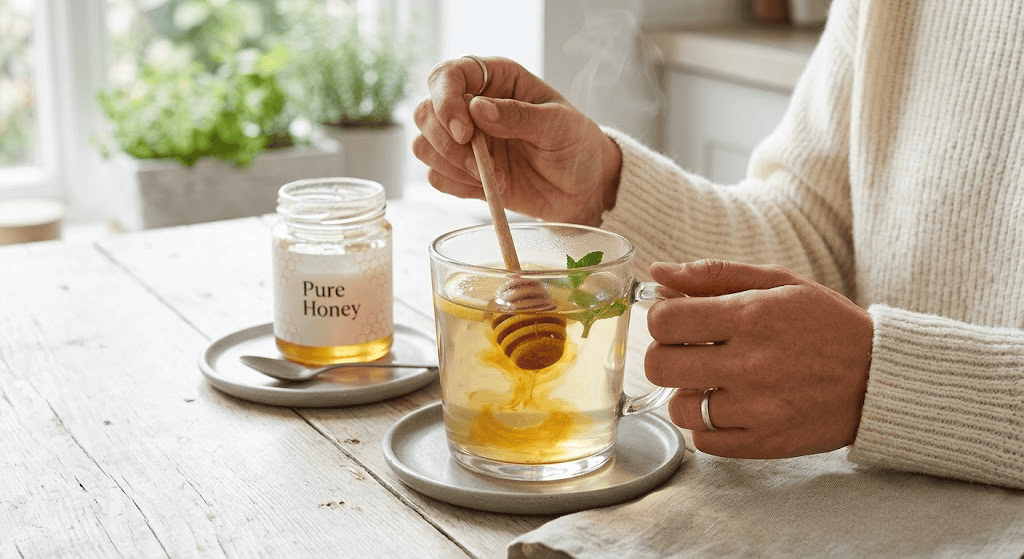
Honey is one of the most well-supported natural sore throat remedies — it has documented antimicrobial properties and creates a thick, protective coating over the irritated throat lining that soothes on contact. Research suggests honey may be as effective as some over-the-counter cough suppressants for easing throat discomfort. Stir one to two tablespoons into a mug of warm (not boiling) water and sip slowly — adding a squeeze of lemon gives you a vitamin C boost alongside the soothing effect.
2. Salt Water Gargle
A salt water gargle is one of the most widely recommended sore throat home treatments, and the NIH acknowledges its effectiveness for reducing throat inflammation and flushing irritants. Salt draws fluid from swollen throat tissues through osmosis, reducing that thick, tight feeling, and the saline environment is inhospitable to bacteria. Dissolve half a teaspoon of table salt in eight ounces of warm water, gargle for 30–60 seconds, and spit — repeat every few hours for best results.


3. Ginger and Honey Tea
Fresh ginger contains gingerols and shogaols — active compounds with well-documented anti-inflammatory and antimicrobial properties that research suggests may help soothe throat pain and reduce swelling. Combined with honey, which coats and protects, this pairing addresses sore throat from two angles simultaneously. Steep a tablespoon of freshly grated ginger in boiling water for 5–8 minutes, strain, stir in a teaspoon of honey, and sip while warm.

4. Apple Cider Vinegar Gargle
Apple cider vinegar’s antimicrobial properties come from its acetic acid content, which creates an acidic environment that may help inhibit bacterial growth in the throat. WebMD notes its use as a traditional sore throat remedy, though it should always be used diluted — mix one tablespoon in eight ounces of warm water and gargle for 30 seconds before spitting. Never gargle undiluted ACV, and rinse your mouth with plain water afterward to protect tooth enamel.

5. Warm Liquids
Keeping the throat consistently warm and moist is one of the simplest and most effective forms of sore throat relief at home — warmth increases blood flow to the area and helps relax the tight, inflamed muscles of the throat. Chicken broth, herbal teas, warm lemon water, and warm diluted juice all work well. The goal is continuous sipping throughout the day rather than large amounts infrequently — a dry throat heals more slowly and stays more painful.

6. Marshmallow Root Tea
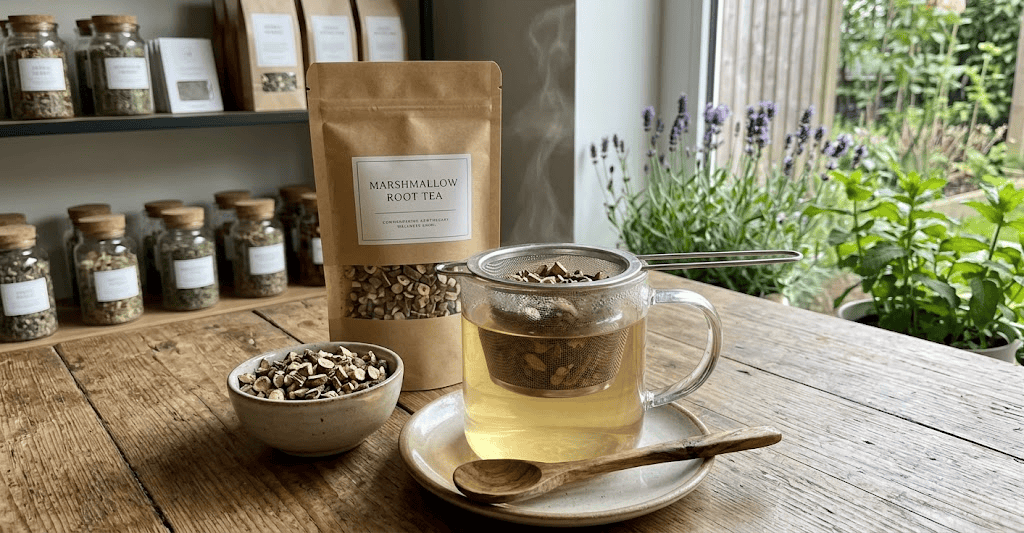
Marshmallow root contains mucilage — a thick, gel-like substance that coats the mucous membranes of the throat when consumed, creating a protective barrier that soothes irritation and reduces the raw, scraped feeling. It’s one of the more traditional herbal remedies with a plausible and well-understood mechanism behind it. Steep dried marshmallow root in cold or warm water for several minutes (cold water actually extracts mucilage more efficiently), strain, and sip slowly two to three times daily.
7. Licorice Root Tea
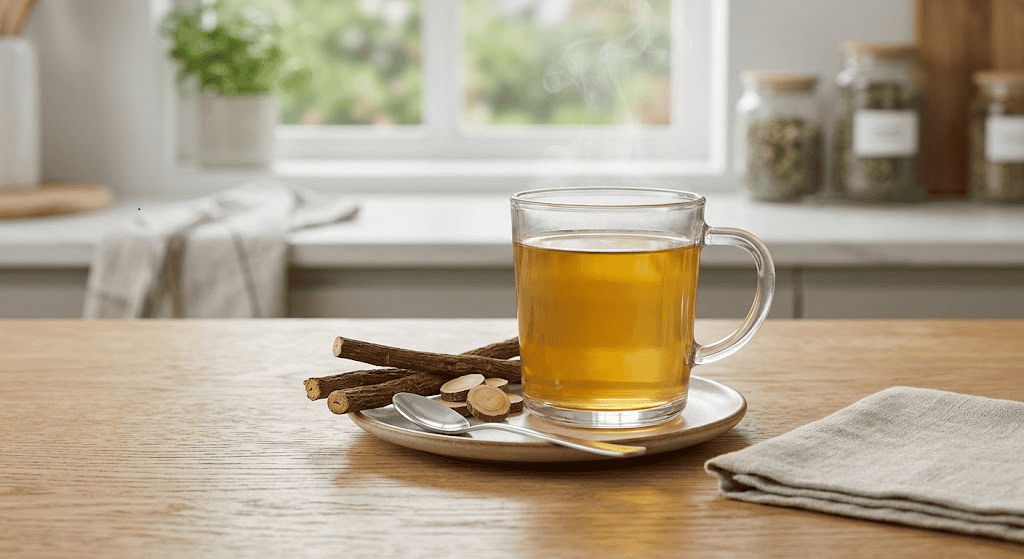
Licorice root has been used in traditional medicine for throat complaints for centuries, and more recent research suggests its active compound glycyrrhizin has meaningful anti-inflammatory and antiviral properties. It’s a common ingredient in throat-soothing teas precisely because it both reduces inflammation and contributes a naturally sweet flavor that makes it easy to drink. Steep a licorice root tea bag for 5 minutes and drink warm — people with high blood pressure or who are pregnant should check with a doctor before regular use, as licorice root can affect blood pressure with extended use.
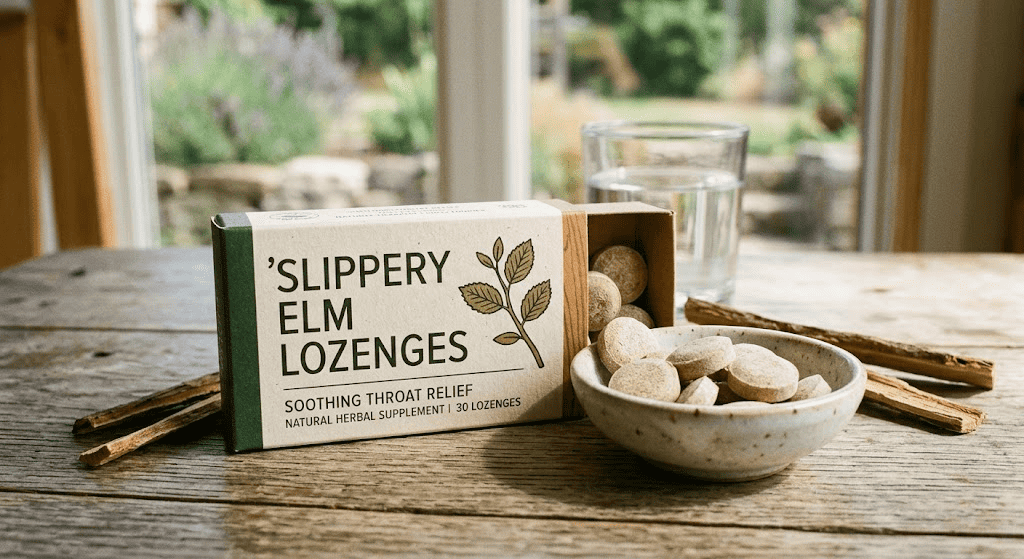
8. Slippery Elm Lozenges
Slippery elm is one of the few herbal remedies recognized by the FDA as a safe and effective demulcent — a substance that relieves irritation by forming a soothing film over mucous membranes. Like marshmallow root, its mucilage content is the active mechanism, coating the throat lining and providing direct, sustained relief on contact. Slippery elm lozenges are widely available at pharmacies and health food stores and are safe to use several times daily during a sore throat.
9. Steam Inhalation
Inhaling steam adds moisture directly to dry, inflamed airways, reducing the friction that makes swallowing painful and helping loosen any congestion contributing to throat discomfort. Lean over a bowl of just-boiled water with a towel draped over your head, breathe slowly through your mouth for 5–10 minutes, and keep your face far enough from the water to avoid burns. Adding a few drops of eucalyptus essential oil provides an additional decongestant effect — particularly useful when sinus congestion is part of the picture.

10. Turmeric Milk (Golden Milk)
Curcumin — the active compound in turmeric — is one of the most studied natural anti-inflammatory agents available, and research suggests it may help reduce the inflammatory response driving sore throat pain. Warm a cup of milk (dairy or plant-based) on the stove, whisk in half a teaspoon of turmeric, a quarter teaspoon of black pepper (which significantly enhances curcumin absorption), and a teaspoon of honey. Drink warm before bed — it’s particularly soothing as a nighttime remedy when you need your throat calm enough to sleep.

When to See a Doctor
Home remedies are appropriate for typical viral sore throats, but certain symptoms signal that you need professional evaluation rather than another cup of honey tea.
See a doctor promptly if you notice:
- White patches or pus on your tonsils — a classic sign of strep throat or tonsillitis requiring antibiotics
- Fever above 101°F that doesn’t respond to home care within 24–48 hours
- Difficulty swallowing or breathing — any throat swelling affecting your airway is urgent
- Skin rash accompanying sore throat — this combination can indicate scarlet fever
- Sore throat lasting more than one week without meaningful improvement
- Severe one-sided throat pain — may indicate a peritonsillar abscess
Strep throat requires antibiotic treatment to prevent complications — home remedies can ease symptoms but won’t clear a bacterial infection.
Frequently Asked Questions
How do I get rid of a sore throat overnight? The most effective overnight approach combines multiple remedies before bed. Drink a mug of warm honey and ginger tea, do a final salt water gargle, then sip warm turmeric milk as you wind down. Sleep with a humidifier running if you have one — dry overnight air is one of the biggest reasons sore throats feel worse in the morning. Keeping your head slightly elevated also helps prevent acid reflux from aggravating the throat while you sleep.
Does honey really help a sore throat? Yes — and it’s one of the better-supported natural remedies. Honey has documented antibacterial properties (particularly raw, unfiltered varieties) and its thick consistency coats the throat lining, providing direct and sustained soothing relief. Research published in journals indexed by the NIH has found honey effective for reducing cough and throat irritation, and it’s safe for daily use in adults. The one firm exception: honey should never be given to children under 12 months old due to the risk of infant botulism.
Is salt water gargle effective? It genuinely is — and it works quickly. The salt draws excess fluid from swollen throat tissue, reducing that painful tightness, creates an environment that discourages bacterial growth, and physically flushes irritants from the throat surface. Gargling every two to three hours during peak soreness provides consistently better relief than doing it once and waiting. Use warm water rather than cold — it dissolves the salt more effectively and is more comfortable on an inflamed throat.
Can I go to work with a sore throat? It depends on the cause and your symptoms. If your sore throat is from dry air or mild allergies with no fever or accompanying illness, you’re unlikely to be contagious. If it’s accompanying a cold, flu, or COVID — even mildly — staying home protects your colleagues. Strep throat is highly contagious; most doctors recommend staying home until you’ve been on antibiotics for at least 24 hours and are fever-free. A rapid strep test at an urgent care clinic takes minutes and answers the question definitively when you’re unsure.
How long does a viral sore throat last? Most viral sore throats peak in severity around days two and three and begin improving by days four through seven, with full recovery typically taking five to seven days in otherwise healthy adults. COVID-related sore throats can occasionally linger a bit longer. If your throat is getting noticeably worse after day three or four rather than improving, or if there’s no improvement at the one-week mark, that’s the point to check in with a doctor rather than continuing to manage at home.
Simple Remedies, Genuine Relief
The best home remedies for sore throat work by reducing inflammation, protecting the throat lining, and keeping the area moist — a salt water gargle, honey in warm water, and consistent warm liquids are your most reliable foundation. Add ginger tea for its anti-inflammatory effect and steam inhalation if congestion is a factor, and most viral sore throats respond well within a few days.
See a doctor if your sore throat is severe, lasts more than a week, or comes with high fever, white patches, or difficulty swallowing.
This article is for informational purposes only and does not constitute medical advice. Always consult a qualified healthcare professional for persistent or severe symptoms.



Leave a Comment