If your hair isn’t growing as fast as it used to — or you’re noticing more shedding than normal in the shower drain or your hairbrush — your body might be missing key nutrients. Before you spend money on the latest “hair growth gummy” trending on social media, it’s worth understanding what the actual research says about the best vitamins for hair growth, because the science tells a more nuanced story than most marketing claims suggest.
Can Vitamins Really Help Hair Growth?
The honest answer is: it depends. If your hair loss or slow growth is tied to a genuine nutrient deficiency, correcting that deficiency can make a real, visible difference. But if your levels are already normal, piling on extra supplements is unlikely to give you noticeably faster or thicker hair. Hair follicles are metabolically demanding tissue, and when the body is short on certain nutrients, it prioritizes vital organs over hair production — which is one reason hair loss is often one of the first visible signs that something nutritional is off.
That’s why dermatologists generally recommend a simple blood panel before reaching for a cabinet full of supplements. A basic panel checking ferritin (iron stores), vitamin D, and a complete blood count can reveal whether your hair concerns are nutrition-related at all, or whether they’re caused by something else entirely — stress, hormones, thyroid function, or genetics. Supplementing blindly, without knowing what you’re actually low in, wastes money and in some cases can even cause harm.
7 Best Vitamins and Nutrients for Hair Growth
1. Biotin (Vitamin B7)
Biotin is probably the single most marketed “hair vitamin” on the market, and it’s worth being upfront about what the research actually shows. Biotin plays a genuine biological role — it’s a cofactor for enzymes involved in keratin production, the structural protein that makes up hair, skin, and nails. Severe biotin deficiency can cause hair loss and brittle hair. The catch is that true biotin deficiency is rare in people eating a normal varied diet, because biotin is found in eggs, nuts, and many other common foods, and gut bacteria also produce some of it.
Reviews of the clinical literature have repeatedly found that biotin supplementation has not been shown to meaningfully improve hair growth in people who are not actually deficient. The handful of documented success stories almost all involve children with rare genetic biotin-processing disorders, not typical adults with everyday hair thinning. There’s also a practical downside worth knowing: high-dose biotin supplements can interfere with certain lab tests, including thyroid panels and troponin tests used to diagnose heart attacks, sometimes producing falsely reassuring or falsely alarming results. If you take biotin supplements, it’s worth mentioning this to your doctor before any blood work. The recommended adequate intake for biotin is just 30 micrograms per day — far less than the thousands of micrograms packed into most “hair, skin, and nails” gummies.

2. Vitamin D
Unlike biotin, vitamin D has a much stronger evidence base when it comes to hair. Hair follicles actually have vitamin D receptors, and these receptors appear to play a direct role in cycling follicles through their growth phases. Research has linked low vitamin D levels to conditions like telogen effluvium (a stress- or illness-triggered shedding pattern) and alopecia areata, an autoimmune form of patchy hair loss. In studies of women experiencing hair thinning, those with documented vitamin D deficiency who supplemented appropriately often saw improvement, particularly when their levels were brought back into a normal range.
Most adults benefit from somewhere between 1,000 and 4,000 IU of vitamin D per day, though the right dose really depends on your baseline blood level, which is something only a test can tell you. Vitamin D deficiency is extremely common, especially in people who spend most of their time indoors, live in northern latitudes, or have darker skin (which produces vitamin D from sunlight less efficiently). Given how widespread deficiency is, and how strong the biological rationale is, vitamin D is arguably the most evidence-backed “hair vitamin” on this list.

3. Iron
Iron deficiency is one of the most well-documented and most common nutritional causes of hair loss, particularly in women. The key marker dermatologists look at isn’t just whether you’re anemic, but your ferritin level — a measure of stored iron. Research suggests that hair follicles may be sensitive to low ferritin even before a person becomes clinically anemic, which means standard bloodwork can sometimes miss the problem if ferritin specifically isn’t checked.
Women with heavy menstrual cycles, those following vegetarian or vegan diets, and people who’ve recently given birth or lost significant blood are all at higher risk of low iron stores. If you suspect this could be you, ask your doctor specifically for a ferritin test rather than just a standard complete blood count, since the two don’t always tell the same story. Iron supplementation should generally be done under medical guidance, since too much iron carries its own health risks and excess supplementation without a documented deficiency isn’t recommended.

4. Zinc
Zinc is involved in protein synthesis and cell division — both essential processes for the rapidly dividing cells inside a hair follicle. Zinc deficiency has a clear, well-documented link to hair loss, and severe deficiency can cause widespread shedding. However, zinc is a nutrient where more is definitely not better. Excessive zinc supplementation can actually interfere with copper absorption and, ironically, contribute to hair loss itself, creating a frustrating cycle for anyone self-supplementing without guidance.
For most people eating a varied diet that includes some meat, shellfish, legumes, or nuts, zinc deficiency is uncommon. It tends to show up more often in people with restrictive diets, certain digestive conditions that impair absorption, or heavy alcohol use. If you do supplement, staying close to recommended daily amounts (around 8–11 mg for most adults) rather than mega-dosing is the safer approach.
5. Vitamin E
Vitamin E is an antioxidant, and the theory behind its use for hair is that it helps protect hair follicles from oxidative stress, which is thought to play a role in some types of hair thinning. Some small studies have shown modest improvements in hair count with vitamin E supplementation, but larger, more rigorous trials haven’t consistently confirmed strong benefits, and some reviews of the broader hair-loss literature have concluded that current evidence doesn’t clearly support vitamin E supplementation specifically for androgenetic alopecia or telogen effluvium. The tocopherol form is generally considered the most usable form by the body. Given the mixed evidence, vitamin E is reasonable to get through diet rather than high-dose supplements.
6. Vitamin A
Vitamin A is genuinely necessary for healthy cell growth, including the cells that make up hair follicles, and a true deficiency can contribute to hair loss. But vitamin A is the clearest example on this list of a nutrient where the dose makes the poison. Excess vitamin A — usually from over-supplementing rather than from food — is itself a well-documented cause of hair loss. This is an important caution given how many multivitamins and “hair, skin, and nails” formulas stack vitamin A alongside other ingredients without much thought to cumulative dosing. Getting vitamin A through a balanced diet, rather than concentrated supplements, is generally the safer route for most healthy adults.

7. Omega-3 Fatty Acids
Omega-3 fatty acids, found primarily in fatty fish and certain plant oils, are thought to support hair growth indirectly by reducing scalp inflammation and supporting the health of the cell membranes within hair follicles. Some studies combining omega-3s with omega-6s and antioxidants have shown reductions in hair shedding and improvements in hair density, though research isolating omega-3s alone is more limited. Beyond hair, omega-3s carry well-established cardiovascular and inflammatory benefits, which makes them a reasonable addition to a healthy diet regardless of hair outcomes specifically.

Best Food Sources for Each Vitamin
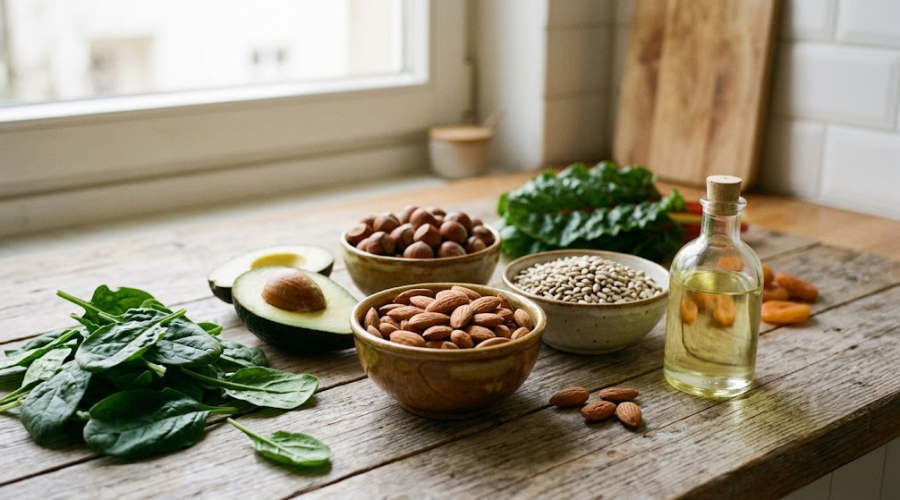
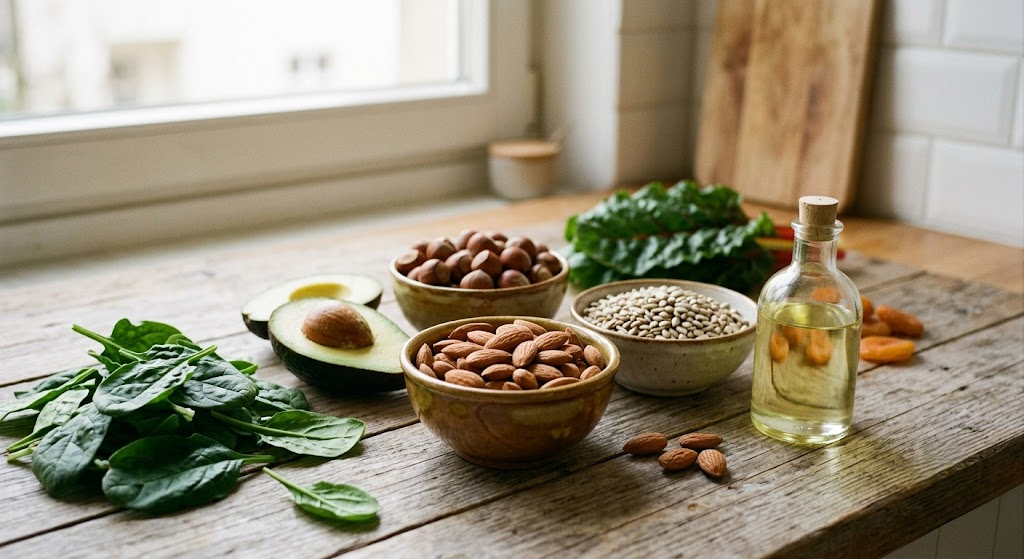
Getting these nutrients from whole foods first is generally the safer and more sustainable strategy, since food sources rarely lead to the kind of excess that can occur with concentrated supplements. Biotin is found in eggs (especially the yolk), almonds, sweet potatoes, and salmon. Vitamin D comes from fatty fish like salmon and mackerel, egg yolks, fortified milk, and of course sunlight exposure on bare skin. Iron is most readily absorbed from red meat, but is also found in spinach, lentils, and fortified cereals — pairing plant-based iron sources with vitamin C (like adding lemon juice to a lentil salad) significantly improves absorption.
Zinc is concentrated in oysters, beef, pumpkin seeds, and chickpeas. Vitamin E is abundant in almonds, sunflower seeds, and avocado. Vitamin A can be found in two forms — preformed vitamin A in liver and dairy, and beta-carotene (which the body converts as needed) in carrots, sweet potatoes, and leafy greens; the beta-carotene route is considered safer since the body regulates conversion and won’t over-produce active vitamin A. Omega-3s are richest in salmon, sardines, walnuts, and flaxseed.
What to Look for in a Hair Growth Supplement
If you’ve had bloodwork done and identified an actual deficiency, or you simply want a sensible nutritional safety net, a few practical guidelines can help you choose a better product. Look for supplements that disclose the exact dose of each ingredient rather than hiding behind vague “proprietary blends,” since you can’t evaluate safety or effectiveness for something you can’t measure. Favor products that have been third-party tested for purity and accurate labeling — independent testing organizations regularly find that supplement contents don’t always match what’s printed on the label.
Be especially cautious of products with very high doses of biotin, vitamin A, or zinc relative to the recommended daily amounts discussed above, since these are the three nutrients on this list most associated with problems from excess intake rather than deficiency. And if you’re taking any medication or have an existing health condition, it’s worth a quick conversation with your doctor or pharmacist before adding a new supplement, since interactions are more common than people assume — particularly with iron, which can interfere with the absorption of certain medications including thyroid hormone and some antibiotics.
Frequently Asked Questions
Does biotin actually help hair grow?
For most healthy adults without a true biotin deficiency, research has not found strong evidence that biotin supplements meaningfully speed up hair growth. Biotin matters most for people with a genuine deficiency, which is uncommon in people eating a typical varied diet.
How long does it take for vitamins to help hair growth?
Hair grows in cycles, and visible improvement from correcting a nutrient deficiency typically takes at least three to six months, since hair follicles need time to cycle through their growth phase before new growth becomes noticeable at the scalp.
What vitamin deficiency causes hair loss?
The deficiencies most strongly linked to hair loss are iron (specifically low ferritin), vitamin D, and in more severe cases, zinc and biotin. A simple blood panel can identify which, if any, apply to you.
Can I take all hair vitamins together?
Stacking multiple hair supplements at once increases the risk of exceeding safe limits for nutrients like vitamin A, zinc, and biotin, since many products overlap in ingredients. It’s safer to identify your actual deficiencies first and supplement specifically for those.
Is it safe to take biotin every day?
Biotin is water-soluble and generally considered low-risk in terms of direct toxicity, but high daily doses can interfere with certain lab tests, including thyroid and cardiac tests, so it’s worth disclosing biotin use to your doctor before bloodwork.
How to Approach Hair Growth Vitamins the Right Way
The most evidence-based way to approach hair growth supplementation is to treat it like any other health decision: start with information, not guessing. That means getting a basic blood panel before spending money on a cabinet full of bottles. A typical “hair loss panel” from a primary care doctor or dermatologist usually includes ferritin, a complete blood count, thyroid-stimulating hormone (TSH), and vitamin D, with zinc sometimes added depending on your diet and symptoms. This single round of testing can save months of trial and error and a fair amount of money on products that were never going to help your specific situation.
It’s also worth setting realistic expectations about timeline and outcome. Hair grows in cycles — roughly 85 to 90 percent of scalp hair is actively growing at any given time, while the rest is in a resting or shedding phase. Correcting a nutrient deficiency doesn’t make hair grow faster than its natural rate of about half an inch per month; what it does is help more follicles stay in the active growth phase instead of prematurely shifting into shedding mode. That’s why results from fixing a deficiency tend to show up gradually over several months rather than overnight, and why patience matters as much as the right nutrient choices.
Finally, it helps to remember that nutrition is only one piece of a much bigger picture. Hair thinning and shedding can also stem from genetics (androgenetic alopecia), thyroid dysfunction, hormonal shifts after pregnancy or with age, chronic stress, certain medications, and autoimmune conditions like alopecia areata. If your bloodwork comes back normal and you’re still experiencing significant hair loss, that’s a sign to see a dermatologist rather than continuing to experiment with supplements, since they can investigate causes that diet alone won’t fix.
Conclusion
The truth about vitamins for hair growth is less exciting than the marketing suggests, but more useful: vitamins help most when they correct an actual deficiency, and the evidence is strongest for vitamin D and iron, weaker for biotin despite its popularity, and genuinely risky in excess for vitamin A and zinc. Before spending money on supplements, a simple blood test can tell you whether you actually need them — and which ones. This article is for informational purposes only and isn’t a substitute for personalized medical advice; talk with your doctor before starting any new supplement.


Leave a Comment